



BlogGuide
Fundraising With Merch, Without the Logistics
Published: Last updated:
Merch fundraisers usually mean guessing quantities, fronting cash, and sorting boxes. On-demand fundraising raises money on the gear people already want — with none of that.

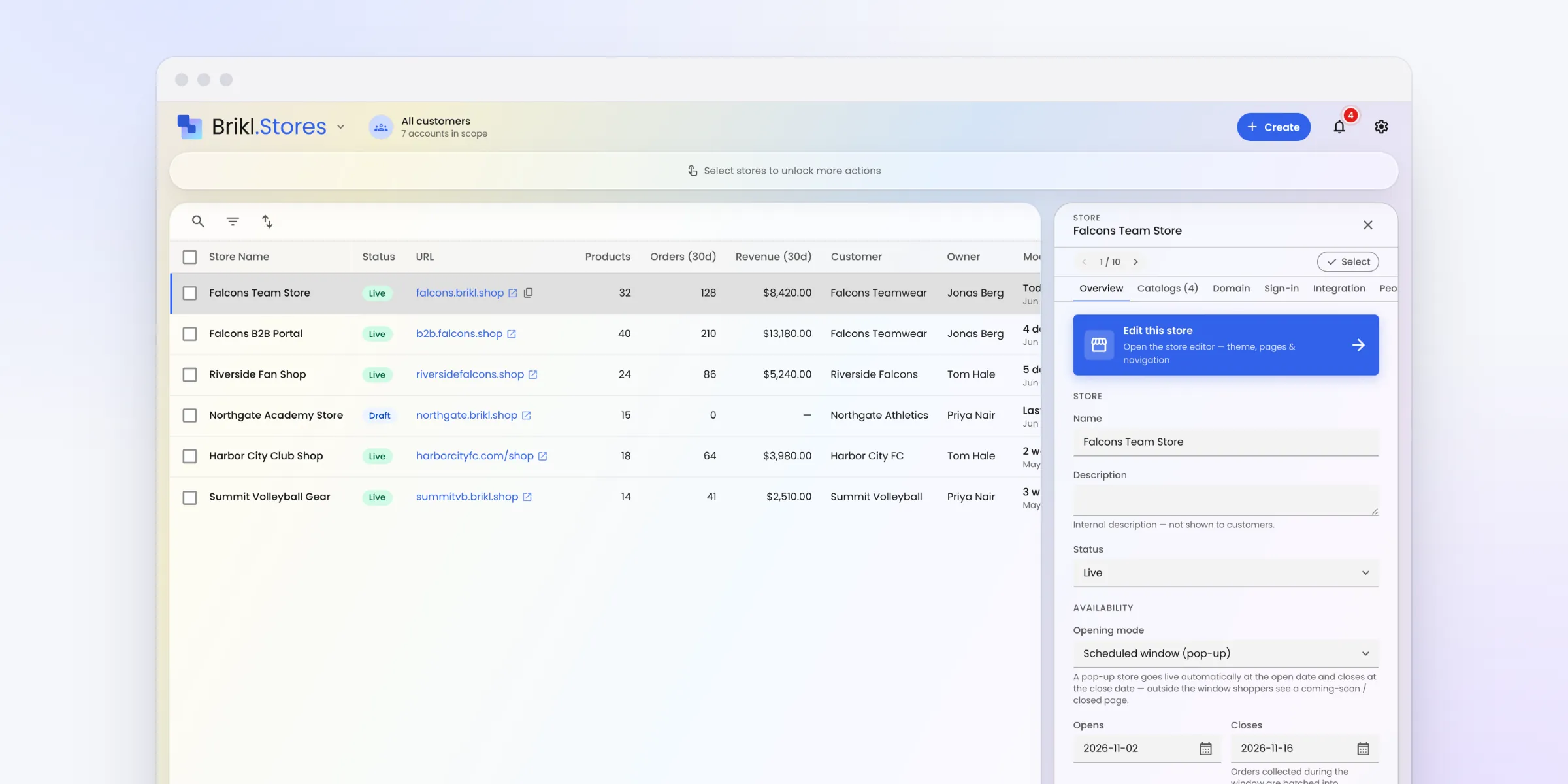
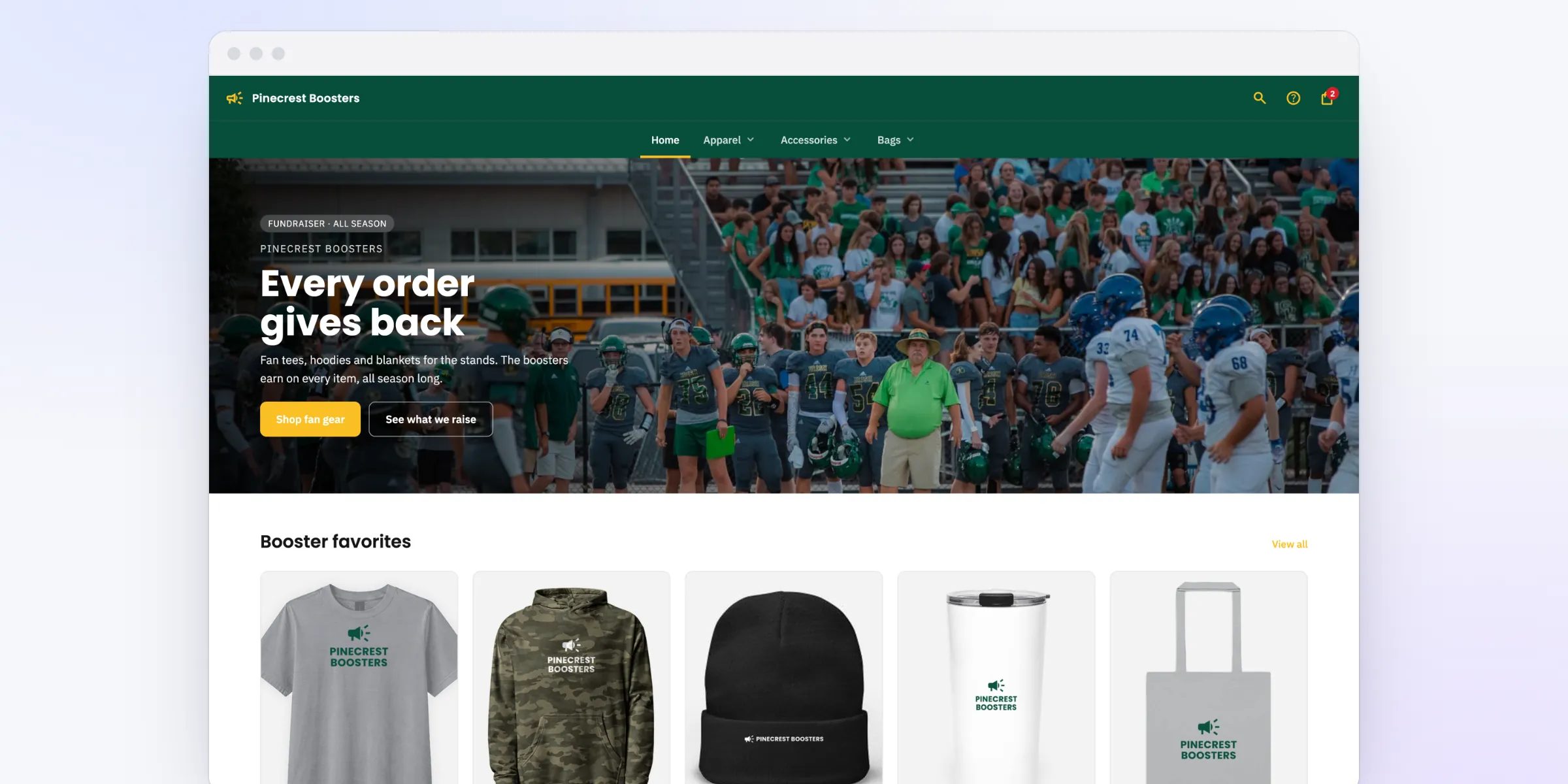
Merch fundraisers usually mean guessing quantities, fronting cash and sorting boxes. An on-demand store raises money on gear people already want, without any of that. On Brikl, a merch fundraiser is a pop-up or always-on store where every item carries a set-aside for your cause. Supporters order what they want, each item is made per order and shipped direct, and you never touch a box.
This is our guide to fundraising with merch. It covers how it works, how to choose between a pop-up and an always-on store, how much you can raise, and what nonprofits need to check, with links to a detailed post on each.
Why do merch fundraisers usually fail on logistics?
The idea is good: people buy something they like, and part of the price goes to the cause. The classic way of doing it is the problem.
- Guessing quantities. Someone has to decide how many shirts, in which sizes, before anyone has ordered.
- Fronting cash. The group pays for a bulk run up front, often before it has raised anything.
- Leftover stock. Unsold sizes sit in a closet, and their cost comes out of what you raised.
- Volunteer time. Volunteers sort boxes, hand out orders and chase payments.
- Margin buried in overhead. By the time all of that is paid for, the amount that reaches the cause is smaller than it looked.
How does on-demand fundraising fix it?
| Classic merch fundraiser | On-demand fundraiser | |
|---|---|---|
| Upfront cost | A bulk run, paid in advance | None |
| Sizes | Guessed | Chosen by each supporter |
| Leftover stock | Common | None, nothing is made until it is ordered |
| Delivery | Sorted and handed out by volunteers | Shipped direct to each supporter |
| Payment | Cash, forms, chasing | Paid at checkout |
| What you raised | Hard to see under the costs | Tracked separately from margin |
How it works on Brikl:
- Open a store and add the products you want to sell.
- Set the fundraiser amount per item, as a percentage or a fixed amount, and add a goal if you like.
- Share one link with your community.
- Supporters order on demand. Each item is produced per order and shipped direct.
- See what you raised. Fundraiser revenue is tracked and reported separately from margin.
Timed pop-up or always-on?
| Pop-up store | Always-on store | |
|---|---|---|
| Open | Between set open and close dates | All year |
| Best for | An event, a season, a campaign | Spirit wear, supporter gear, repeat buyers |
| Production | Batched after the store closes | Each order as it comes in |
| Why it works | A deadline gets people to order now | Money keeps coming in without a new campaign |
Many groups do both: an always-on store for the basics, and a pop-up for each big moment. Read how to run a pop-up shop fundraiser with no inventory for a step-by-step plan, and see pop-up and fundraiser stores for the store types.
How much can you raise?
Items sold multiplied by the amount each item contributes. To estimate it: people you can reach × share who buy × items per buyer × set-aside per item. In our illustrative examples, a 300-family PTA raises about $1,080 and a 120-player sports club about $1,152.
Read how much a merch fundraiser can raise for the examples and the levers that change the result, or try the fundraising calculator.
Fixed amount or percentage?
A fixed amount, such as "$5 from every item goes to the team," is easy to explain and works when prices are similar. A percentage keeps things fair when prices vary, from a $25 tee to a $60 hoodie. Read flat vs. percentage fundraisers to choose.
Who runs merch fundraisers?
| Group | Typical fundraiser | Read more |
|---|---|---|
| Schools and PTAs | Spirit wear, school fairs, fun runs | How much can a merch fundraiser raise? |
| Sports clubs | Fan gear next to the club kit | What to order for a club sports team |
| Nonprofits | Appeals, awareness campaigns, events | Can a nonprofit sell merchandise? |
| Gyms and studios | Charity challenges | Gym merch ideas |
| Distributors and decorators | Pop-up stores for clients and events | Printasaurus case study |
What should nonprofits check first?
A nonprofit can sell merchandise, but federal tax-exempt status does not automatically exempt it from state sales tax, and regular merch sales can raise questions about unrelated business income. Brikl can apply a supported sales tax exemption at checkout when you provide valid documents. Read can a nonprofit sell merchandise? and the guide to tax-exempt nonprofit stores before you launch.
What does it cost?
- No setup fee, subscription or stock purchase.
- A 3.5% fee per transaction, charged on the selling price including shipping and excluding tax.
- Card processing is separate: 2.9% + $0.30 through Stripe in the US.
A checklist to get started
- Decide what the money is for, and set a goal.
- Choose a pop-up, an always-on store, or both.
- Pick three to five products people will use.
- Set the amount per item: fixed or percentage.
- Nonprofits: check sales tax and exemption documents.
- Plan three messages: at launch, halfway and on the last day.
- Share one link everywhere: email, social, flyers and a QR code at events.
Frequently asked questions
Do we need to buy stock?
No. Every item is made after it is ordered, so there is no upfront cost and no leftover stock.
Can we run more than one fundraiser at once?
Yes. One store can run several campaigns, each with its own items and goal.
Can supporters donate on top of their order?
Yes. Supporters can add a donation at checkout, kept separate from the merch sale. You can also thank volunteers and sponsors with coupon codes.
How long does delivery take?
Orders ship in 7–10 business days.
The fundraising reading list
- How to run a pop-up shop fundraiser with no inventory
- How much can a merch fundraiser raise? Examples by group size
- Flat vs. percentage fundraisers
- Can a nonprofit sell merchandise? Sales tax, exemptions and what to check
- Guide: tax-exempt nonprofit stores
- Fundraising calculator
Ready to start your fundraiser? Start free, no credit card needed.
More from the blog
Guide
How to Run a Pop-Up Shop Fundraiser With No Inventory
Run a pop-up shop fundraiser with no upfront cost or leftover stock. Set the dates, choose the products and raise money on every item.
Guide
How Much Can a Merch Fundraiser Raise? Examples by Group Size
Estimate what your merch fundraiser could raise with one simple formula, plus examples for a PTA, a sports club and a nonprofit.

Guide
Flat vs. Percentage: How to Run a Merch Fundraiser That Scales
A merch fundraiser can raise a set dollar amount per item — or a percentage of the price that scales with every sale. Here's when to use each, and how to run a drive that funds itself on demand on Brikl.